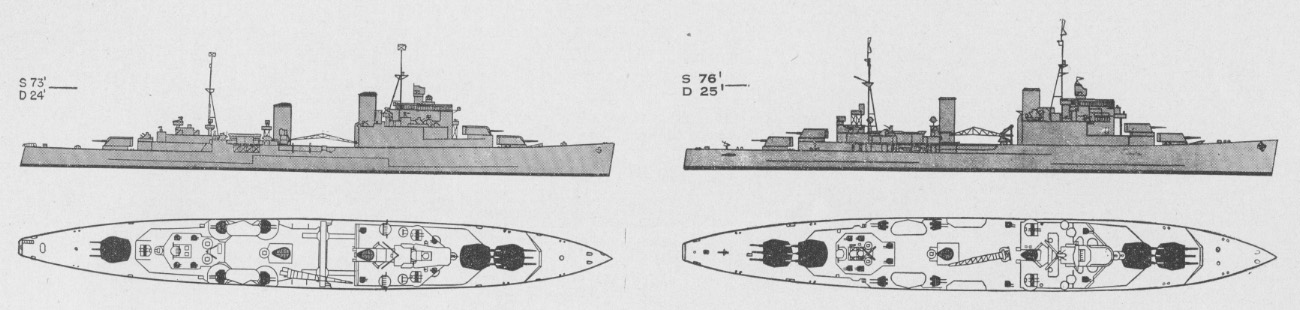
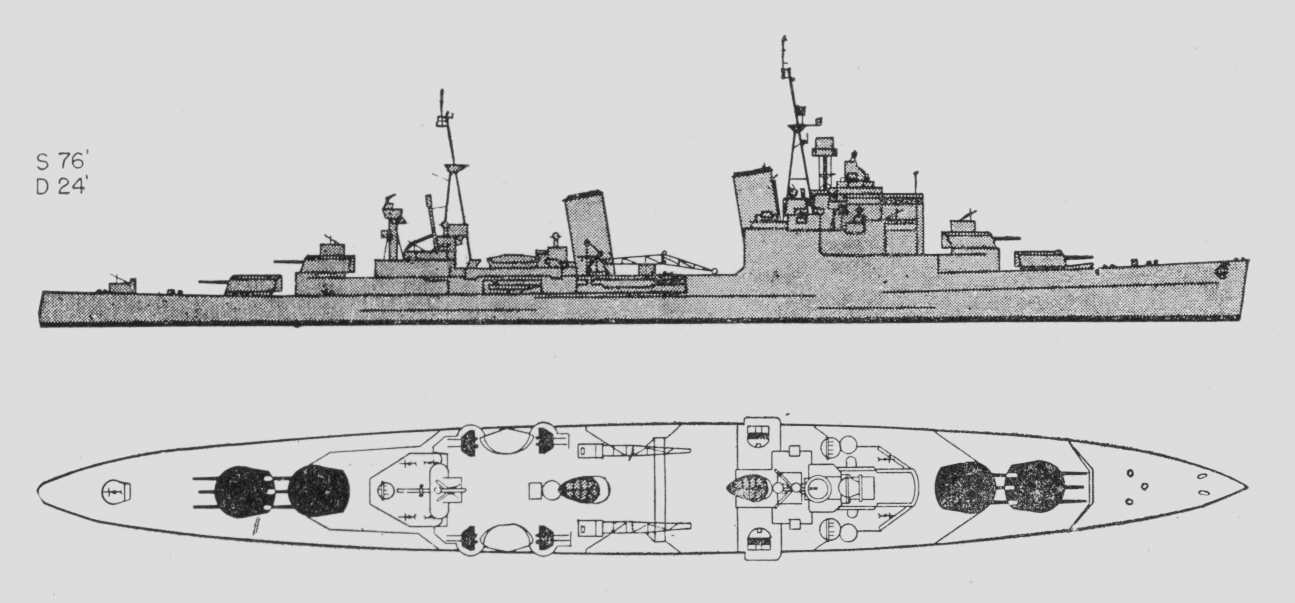
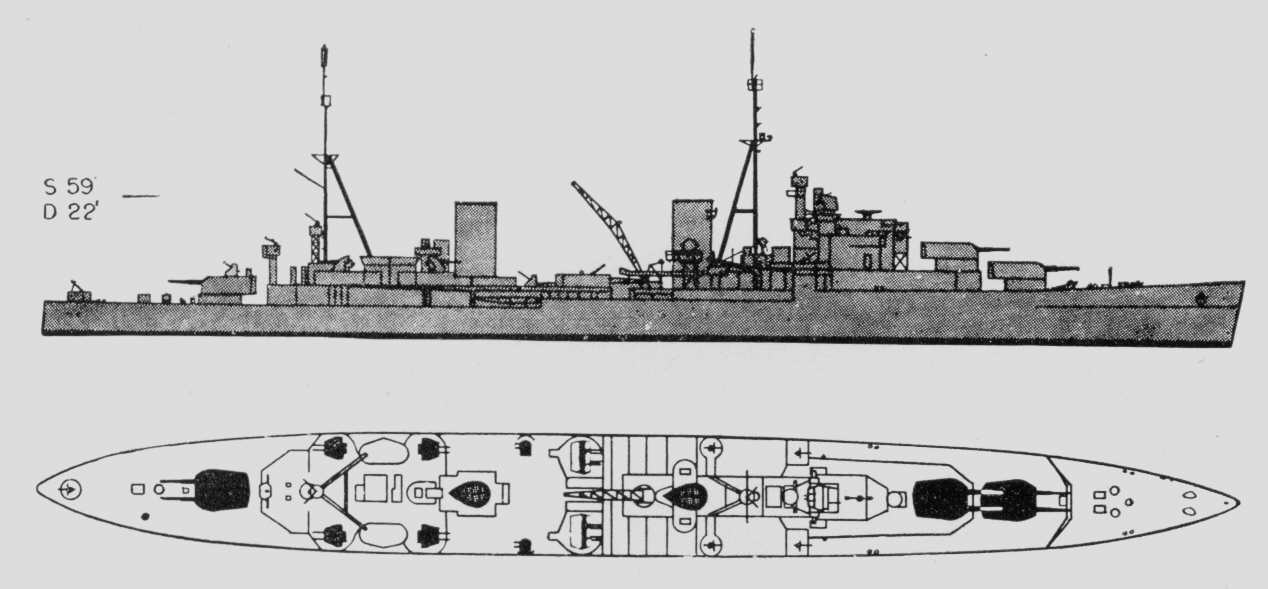
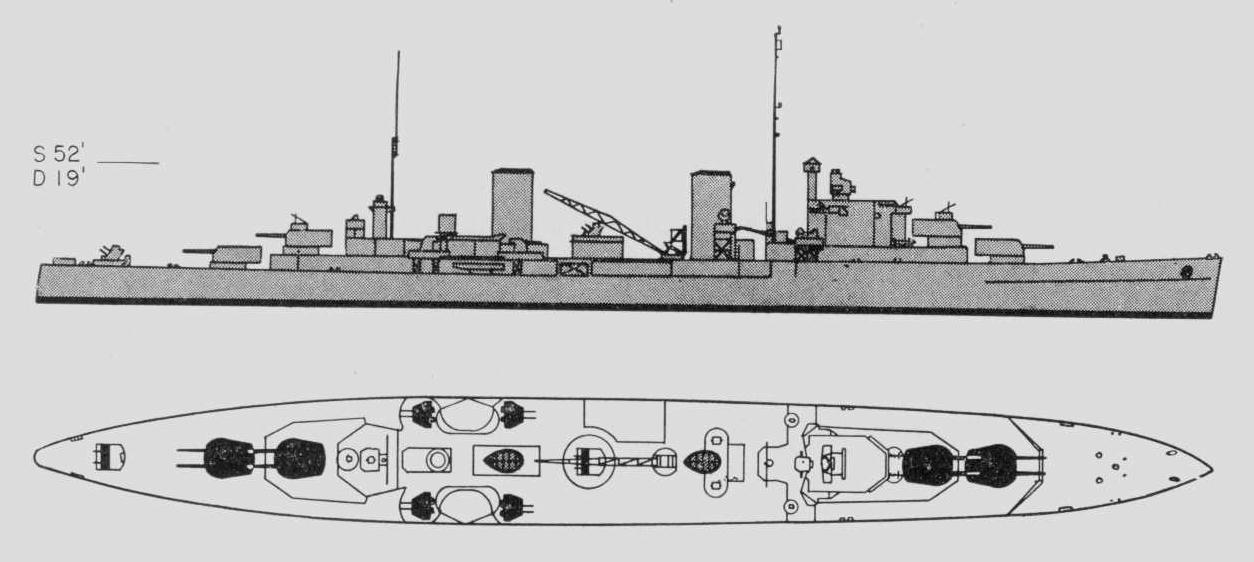
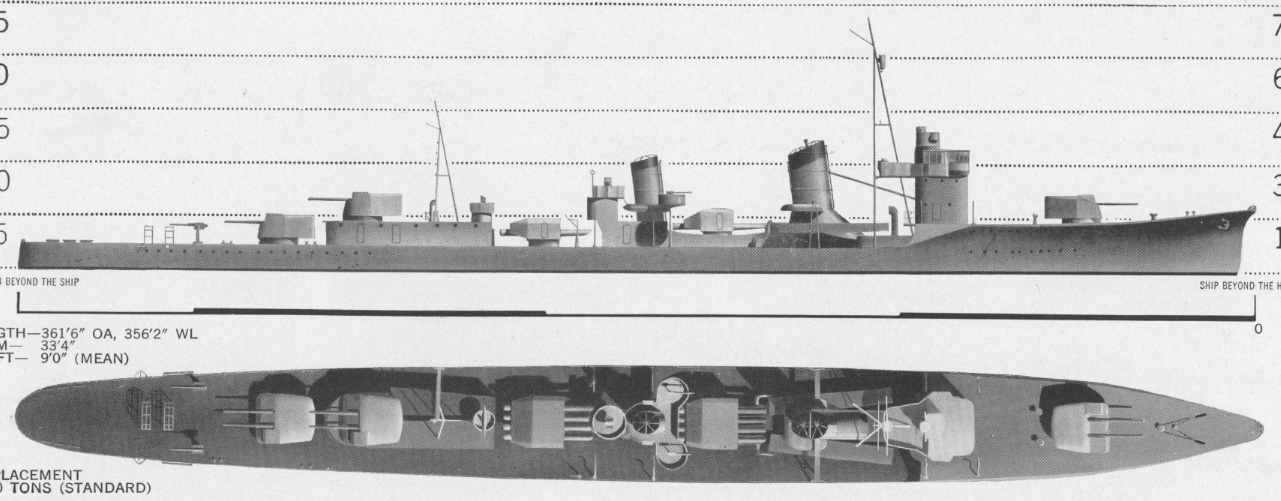
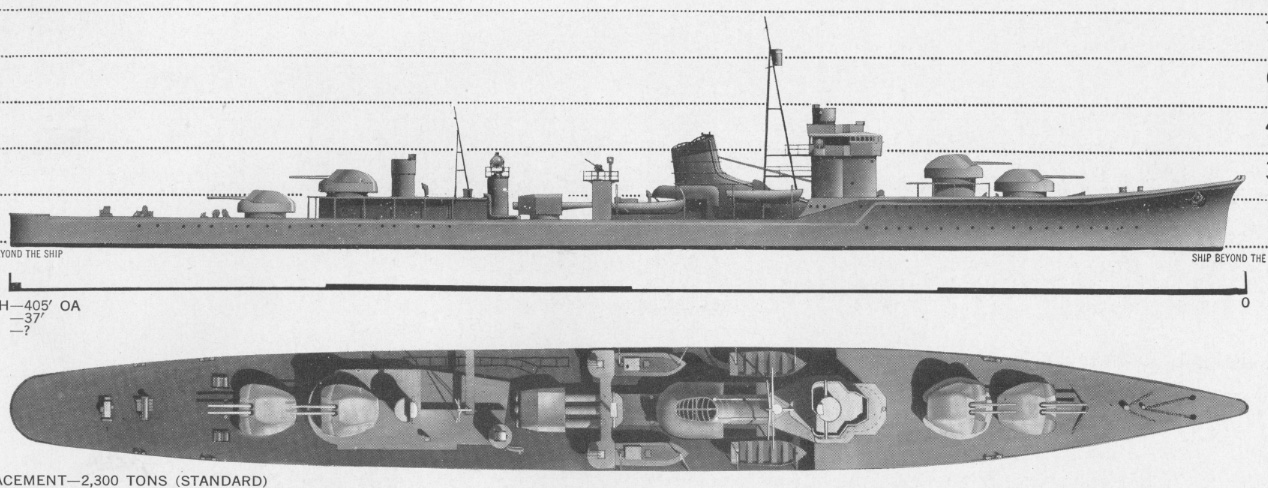
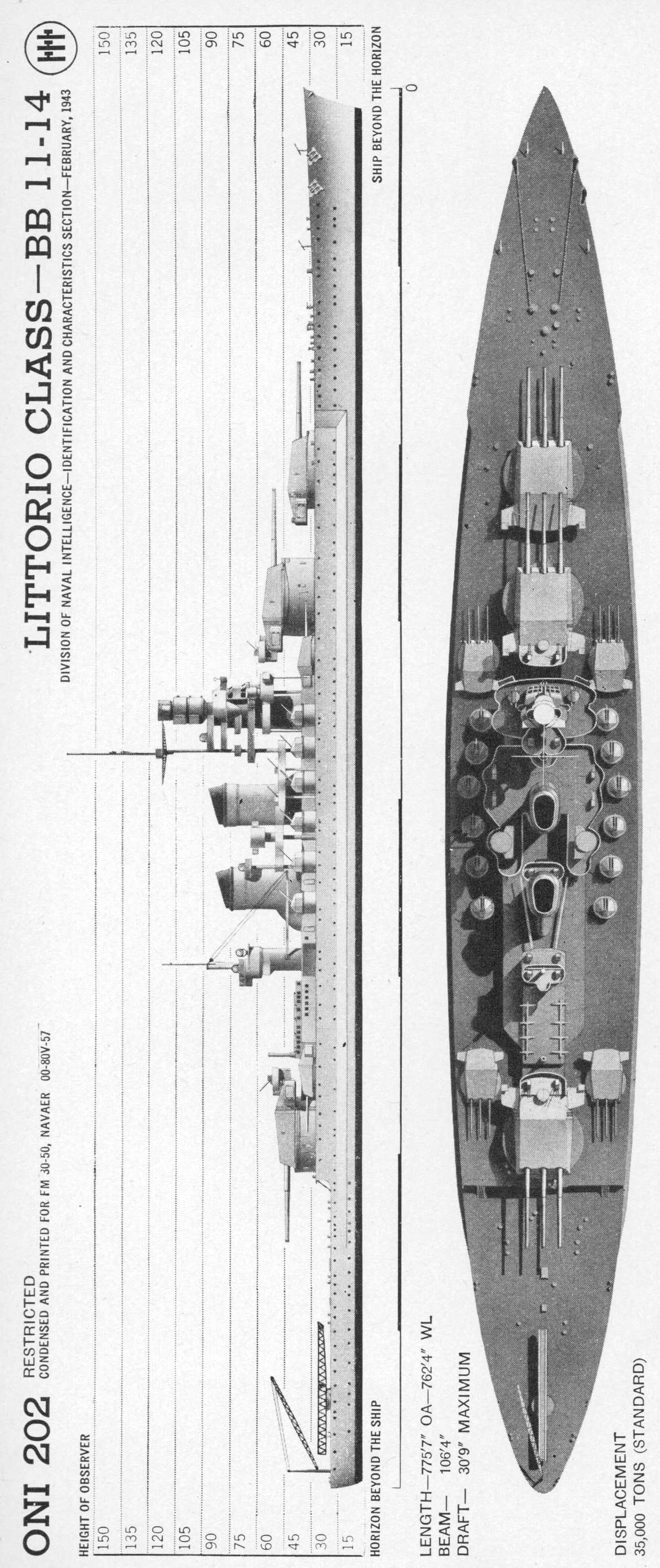
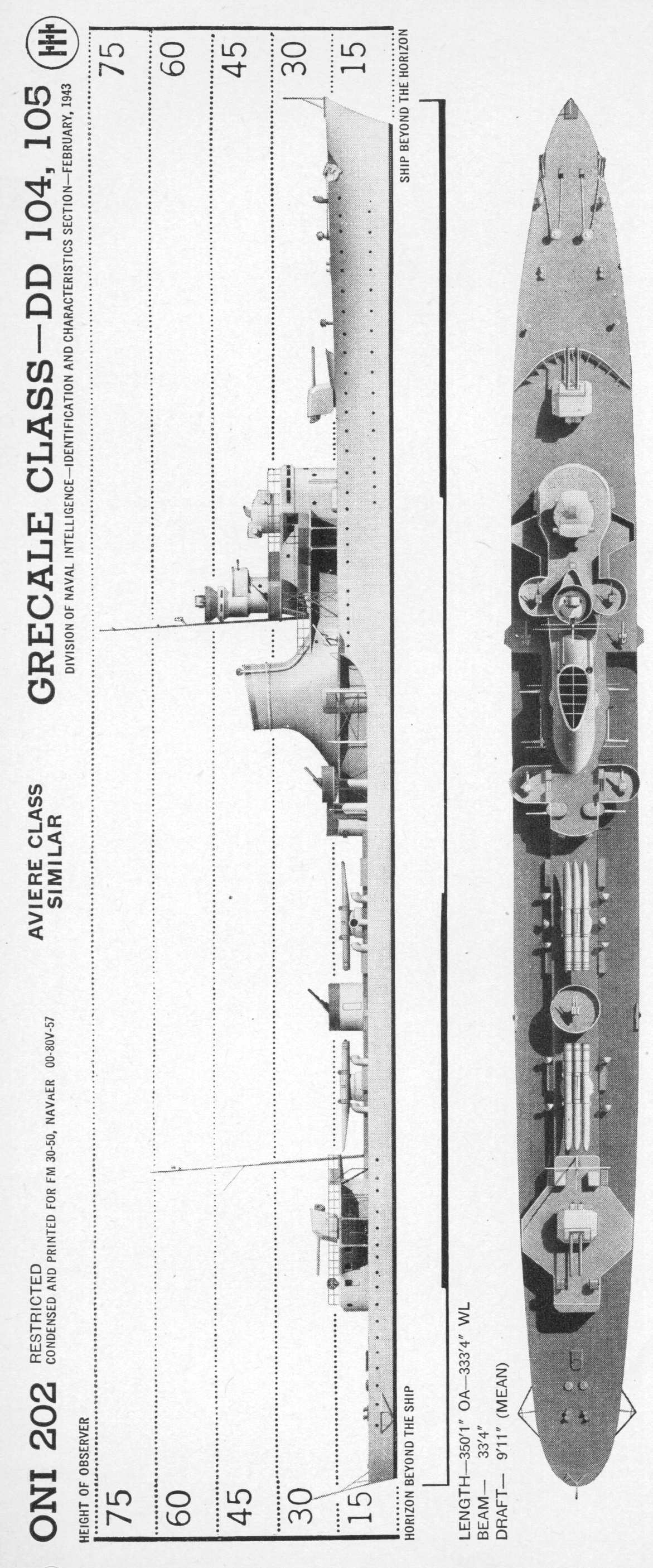
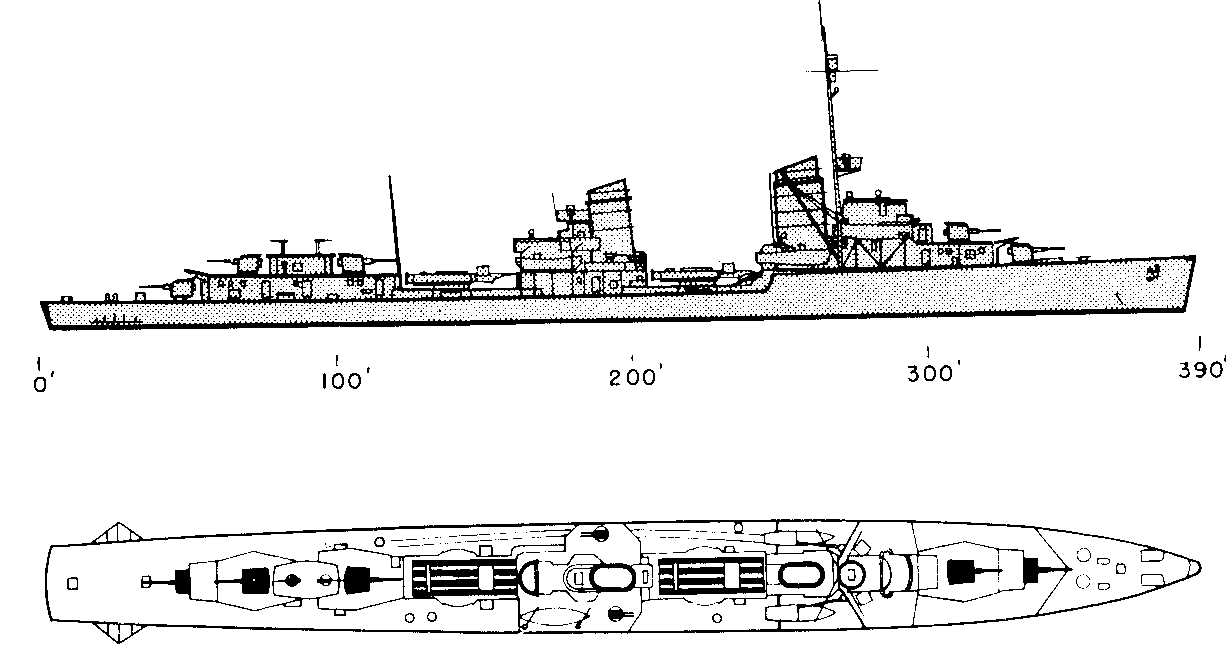
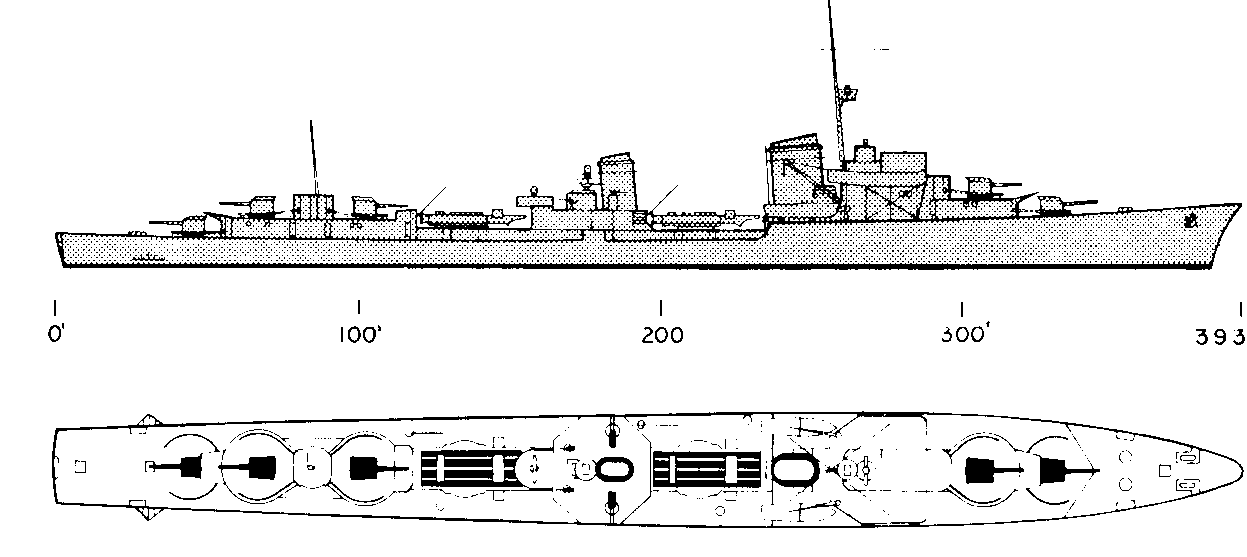
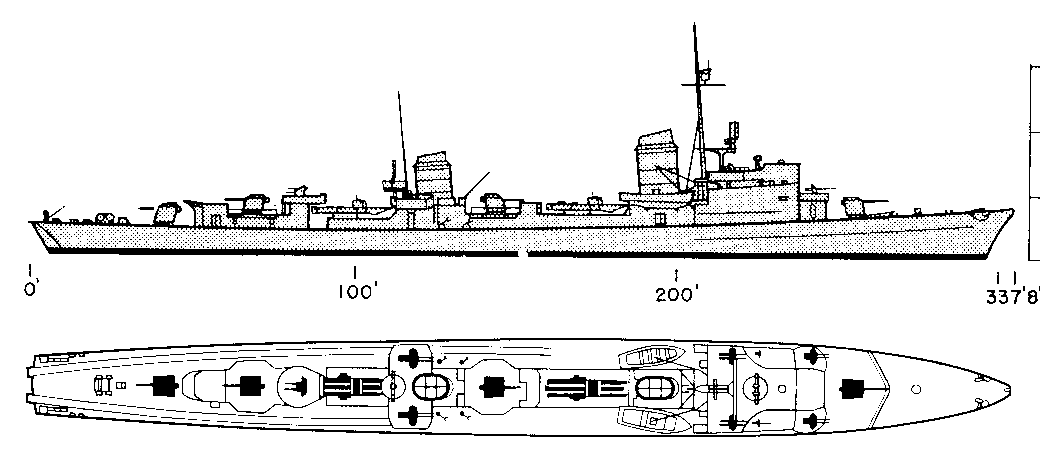
Note: Because of computer graphics, the drawings may appear to be over-shaded and difficult to look at on the screen, but they should print out much more nicely at their real size. Long drawings are vertical for ease of printing.
All these drawings were scanned by me from original ONI recognition manuals -- and as U.S. government documents, they are public domain -- they are not from privately published reprintings and videodiscs.
I use these public domain plans to design my cardstock model ships -- See my photos of some I've constructed.
I also have, here on my webpage, free, relatively simple cardstock model plans of MONITOR, MERRIMAC(K/CSS VIRGINIA), a BUTLER class U.S. Navy Destroyer Escort (DE), a HUNT Type 1 class British escort destroyer, and the "Raubvogel" class German torpedoboot.
I maxed out my Tripod webpage space with ship drawings and am moving them to make space, so see also http://www.coatneyhistory.com for ONI ship drawings, including Japanese merchant ships.
American -- U.S. Navy:
Carriers:
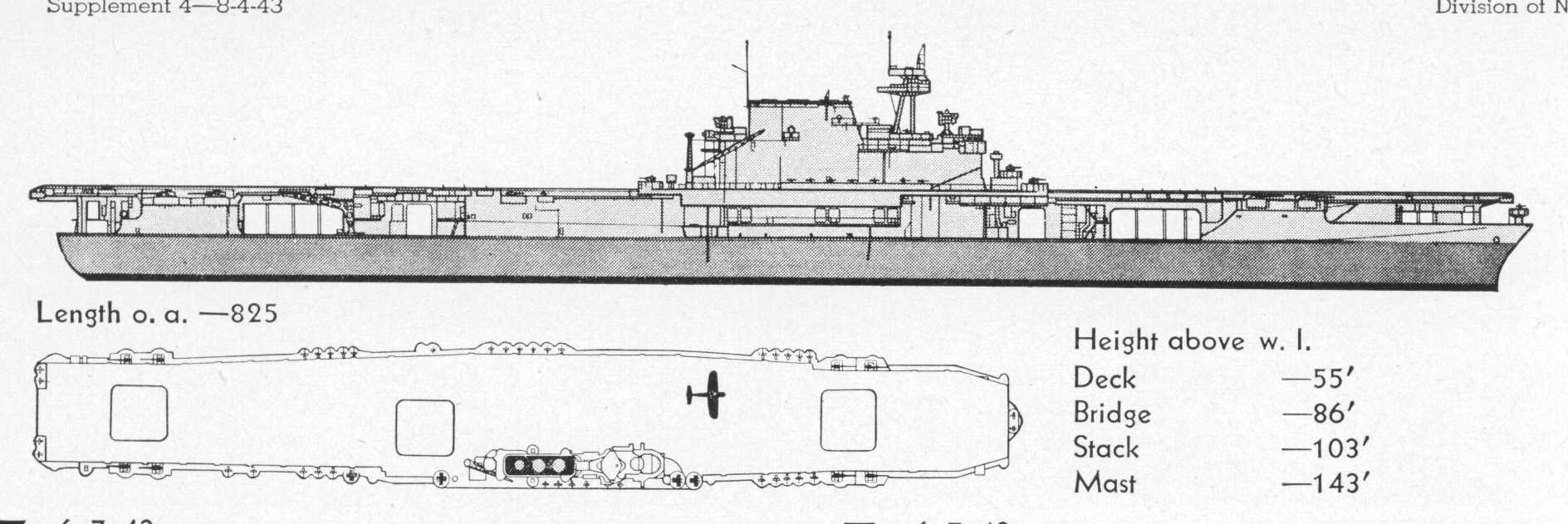
- ENTERPRISE was the sole survivor of her class of YORKTOWN and the later HORNET (from which General Jimmy Doolittle's twin-engined Army B-25 medium bomber "Raiders" were launched against Japan in April 1942).
Cruisers:
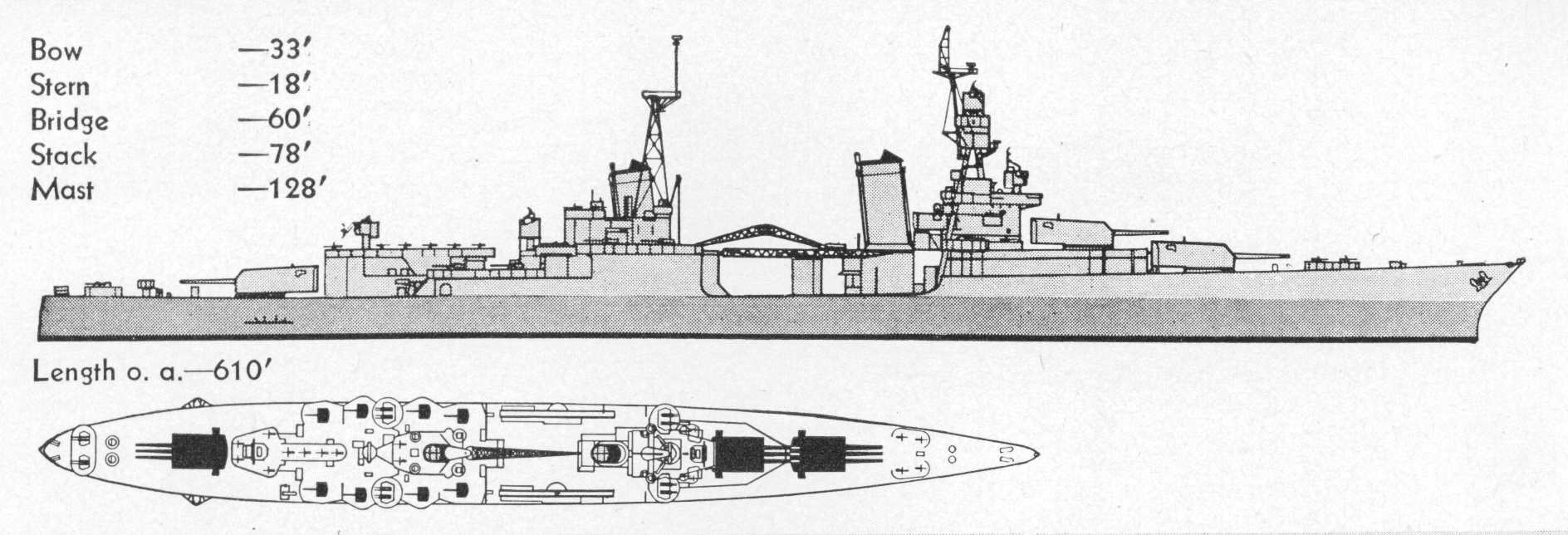
- INDIANAPOLIS, PORTLAND heavy cruisers -- nine 8" guns.
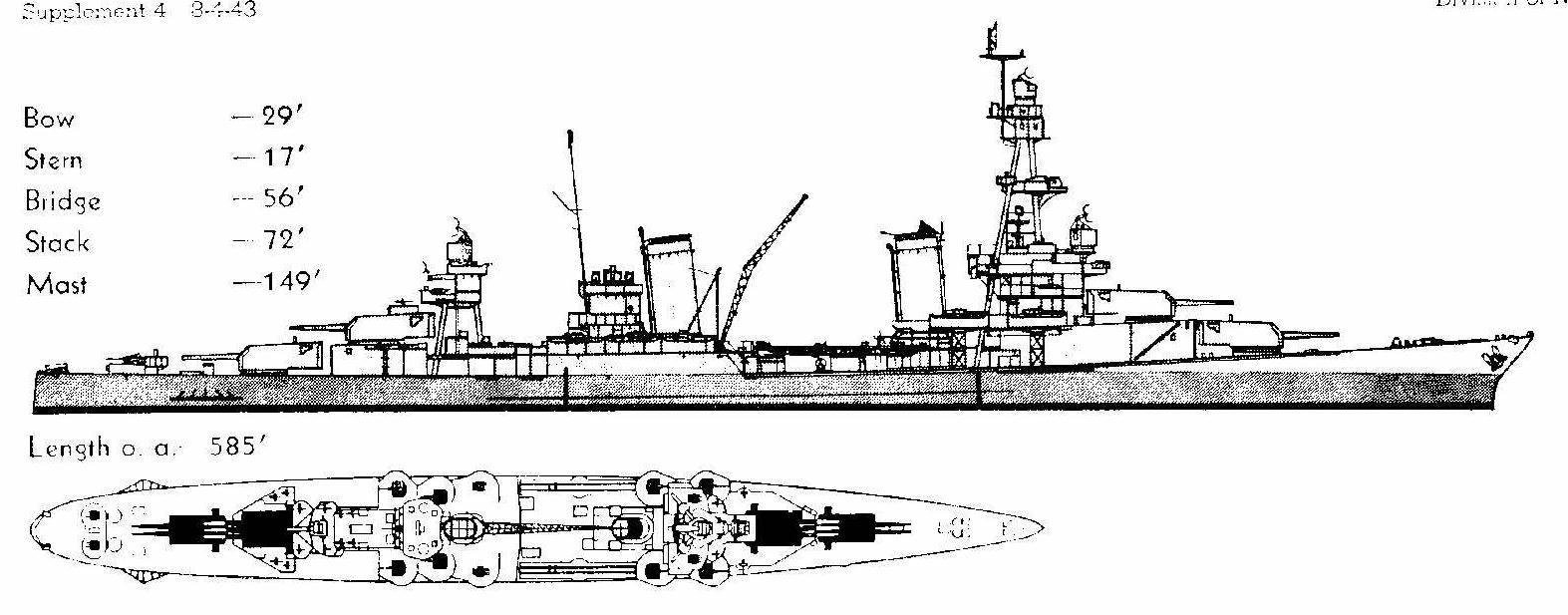
- PENSACOLA, SALT LAKE CITY (aka "Swayback Maru") class of heavy cruisers -- ten 8" guns, and notice that the 3-gun turrets are the upper, superimposed ones. This was actually the first of our Washington Naval Treaty limited "heavy cruisers," and it featured torpedo tubes (and fewer secondary guns) in its original configuration. SLC had the distinction of participating in (and barely surviving) one of the few daylight Pacific surface battles: The Battle of the Kommandorski Islands west of the Aleutian Islands, which it, OMAHA class light cruiser RICHMOND, and some prewar destroyers won against the odds.
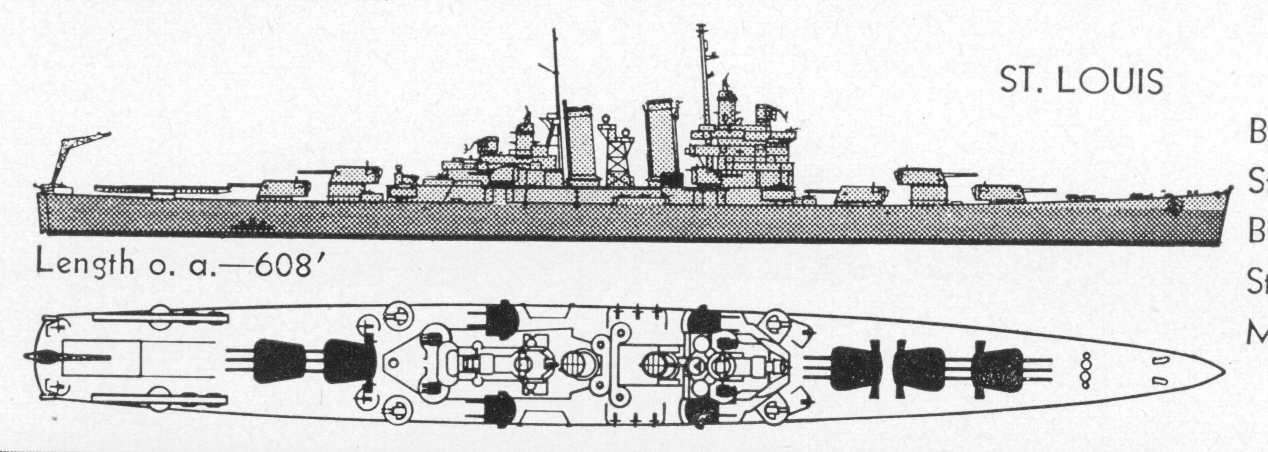
- HELENA was from the modern prewar light cruiser class with fifteen! 6"/152mm guns. She, ST. LOUIS, and SAVANNAH had their dual-purpose 5" secondary guns mounted in twin turrets, unlike the other, earlier ships of the BOISE class, which had their 5" secondary guns singly mounted in the vulnerable "galleries" along the gunwales which characterized the prewar cruiser designs.
Destroyers:
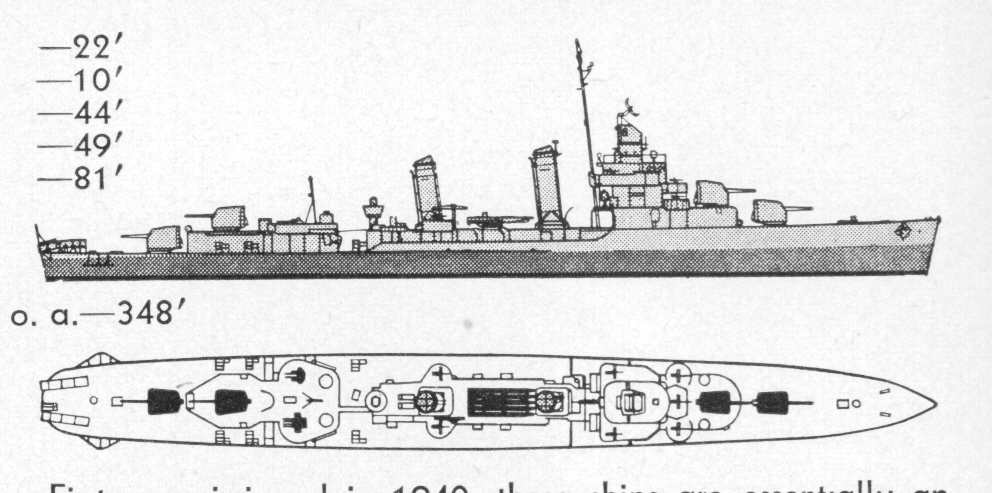
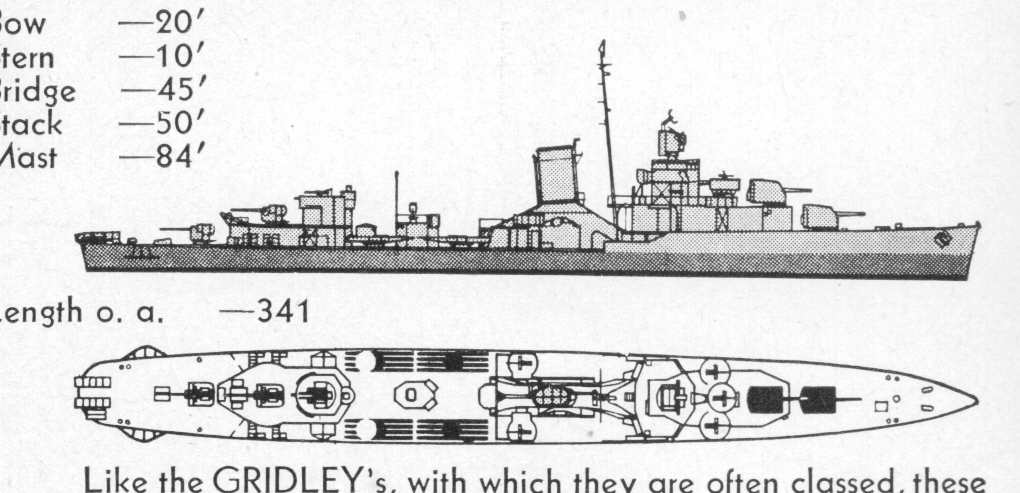
- BENSON was the final prewar destroyer class which, like most of our modern prewar destroyers, was found to be topheavy and/or deficient in antiaircraft weapons and had to have its armament scaled back, usually to four 5" guns and five 21" torpedo tubes, although MONSSEN and GWIN (for example) had ten 21" torpedo tubes, but with fewer antiaircraft guns and X (no. 3) gun turret open-roofed to reduce topweight. USS MACOMB was a Benson/Gleaves class destroyer.
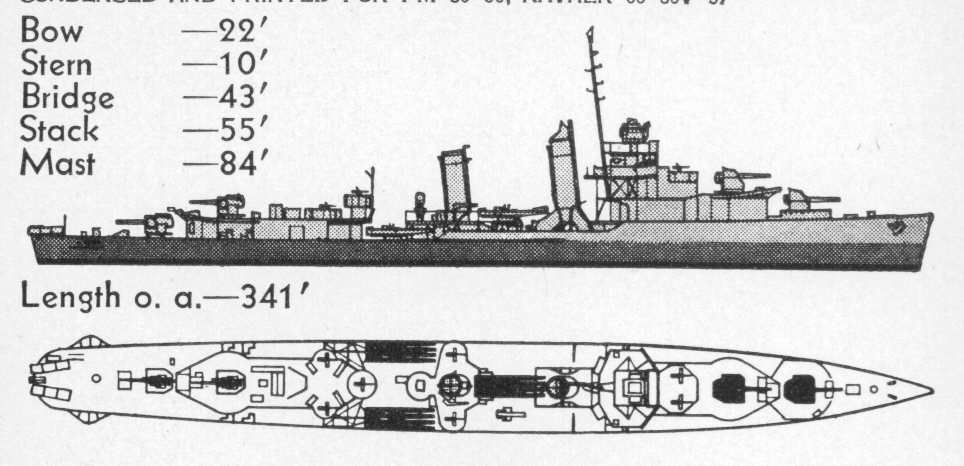
- SIMS was the preferred class for escorting our fast carriers early in the war. Four 5" guns, eight 21" torpedo tubes. Note that the third gun turret has an open (or canvas-covered) roof, to save topweight.
- MAHAN had five and then four 5" guns and twelve 21" torpedo tubes with one of the three quadruple sets mounted high on the centerline.
- BAGLEYs had four 5" guns but sixteen! 21" torpedo tubes. Of course, at the time of the war they were employed, our radar was unreliable and our torpedoes not only usually didn't work but sometimes turned back against the ships that launched them!
- Old World War I 4-Stackers were actually quite effective early in the Asian-Pacific War, with their four 4"/105mm guns and twelve 21" torpedo tubes. This graphic shows both the orginal prewar configuration and the modified configuration with six 3"/76mm guns and only six torpedo tubes.
British:
The Royal Navy fought heroically throughout the war, suffering heavy casualties. Its ships were reliable and adequate, but its skilled, courageous, and aggressive officers and men made the victorious difference time and time again. As has been said (in the documentary film series "Victory At Sea" and) many times, the very aggressive Spirit of (Admiral Horatio) Nelson permeated the Fleet, and its enemies knew they would have a fight on their hands in any confrontation.
Battleships:
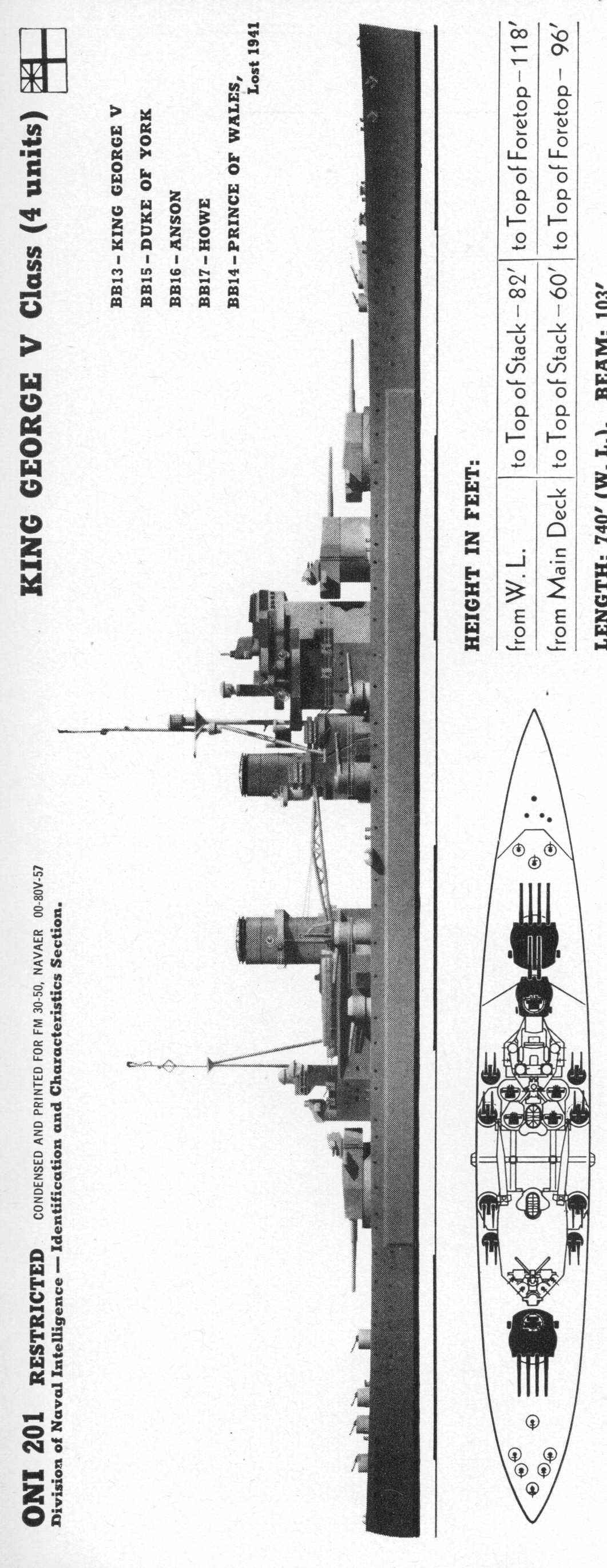
- The KING GEORGE Vs were a modern but compromise design which was plagued by breakdowns of its ten 14" guns throughout its service. To Britain's shock, PRINCE OF WALES was sunk by Japanese torpedo bombers at sea off Malaya on 10Dec41, three days after Pearl Harbor (along with battle cruiser REPULSE).
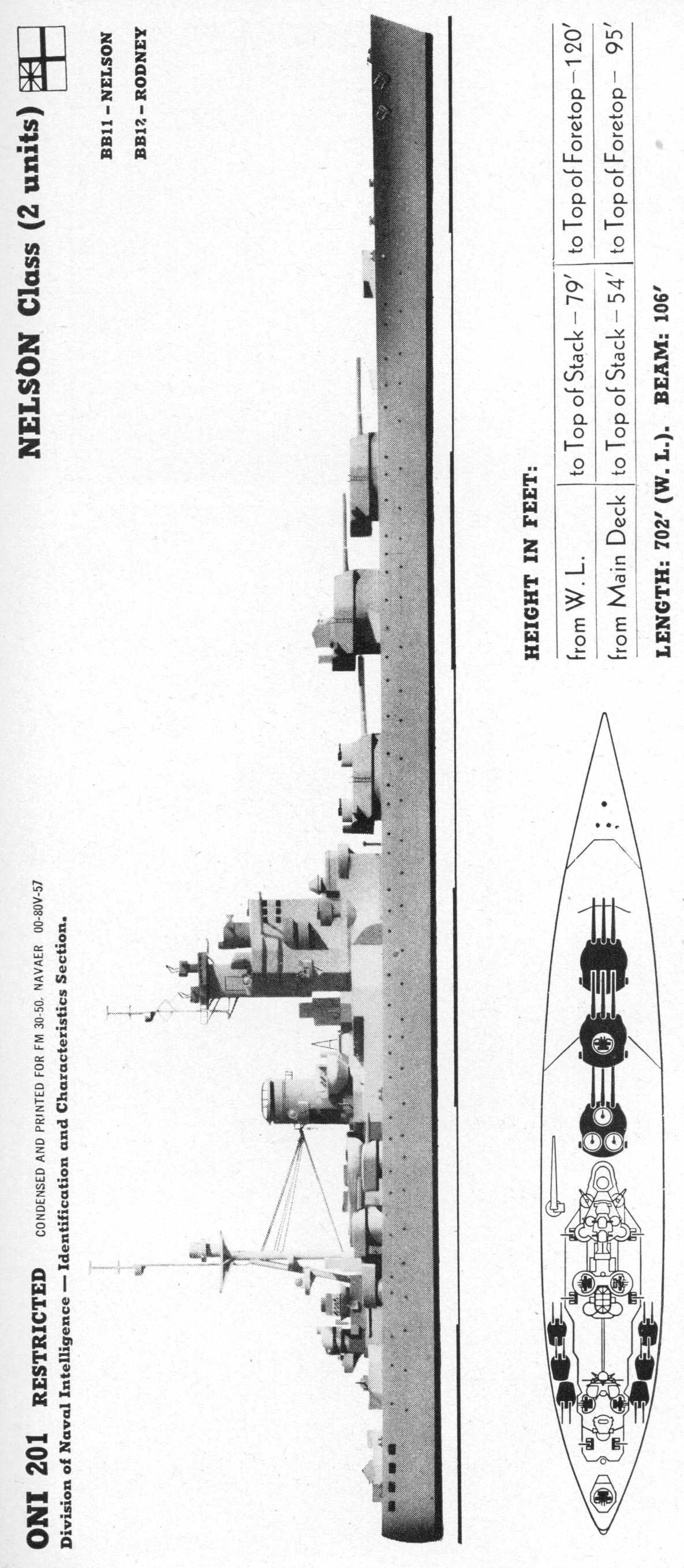
- NELSONs had nine 16" guns on an ungainly hull which challenged quartermaster (steering) officers, especially when sailing in and out of harbor. It was RODNEY's 16" guns, though, that did the most to sink BISMARCK.
Aircraft Carriers:
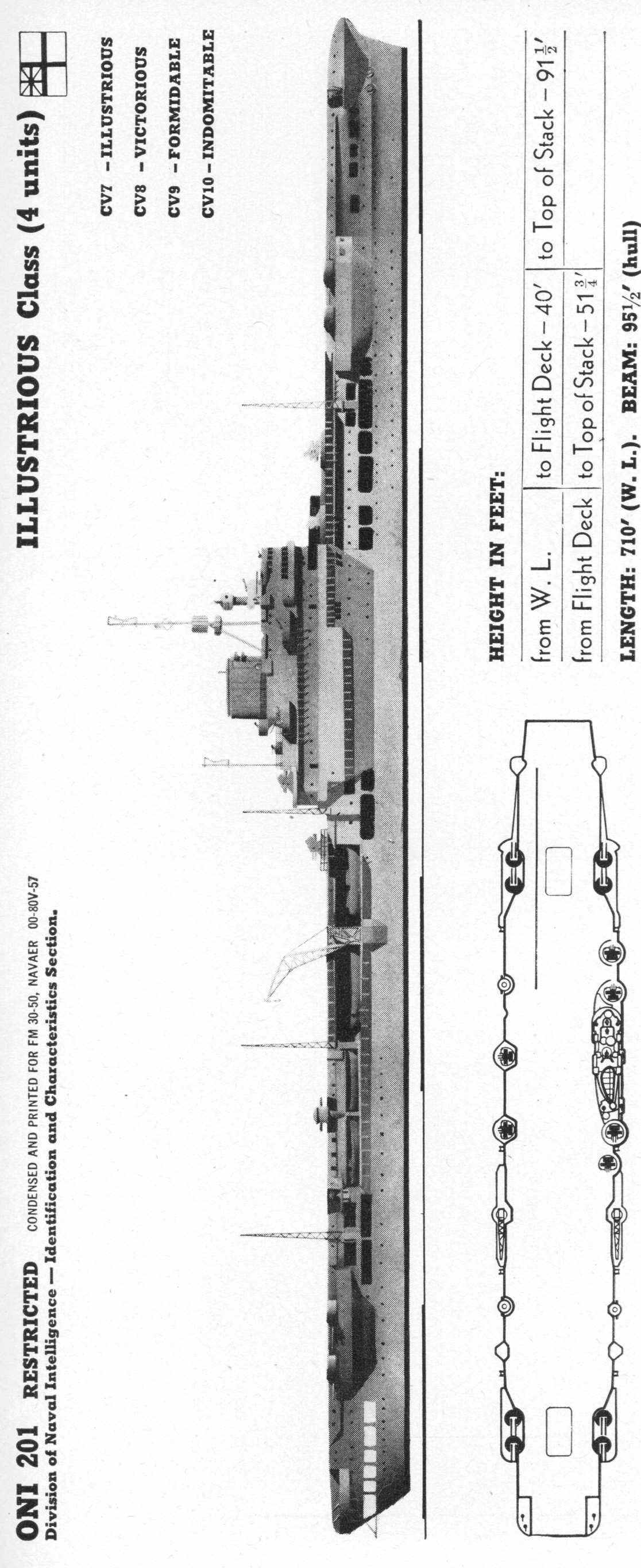
- ILLUSTRIOUS was an armored carrier of limited aircraft capacity which survived an incredible pounding by German divebombers on its way to the island fortress of Malta.
Cruisers:
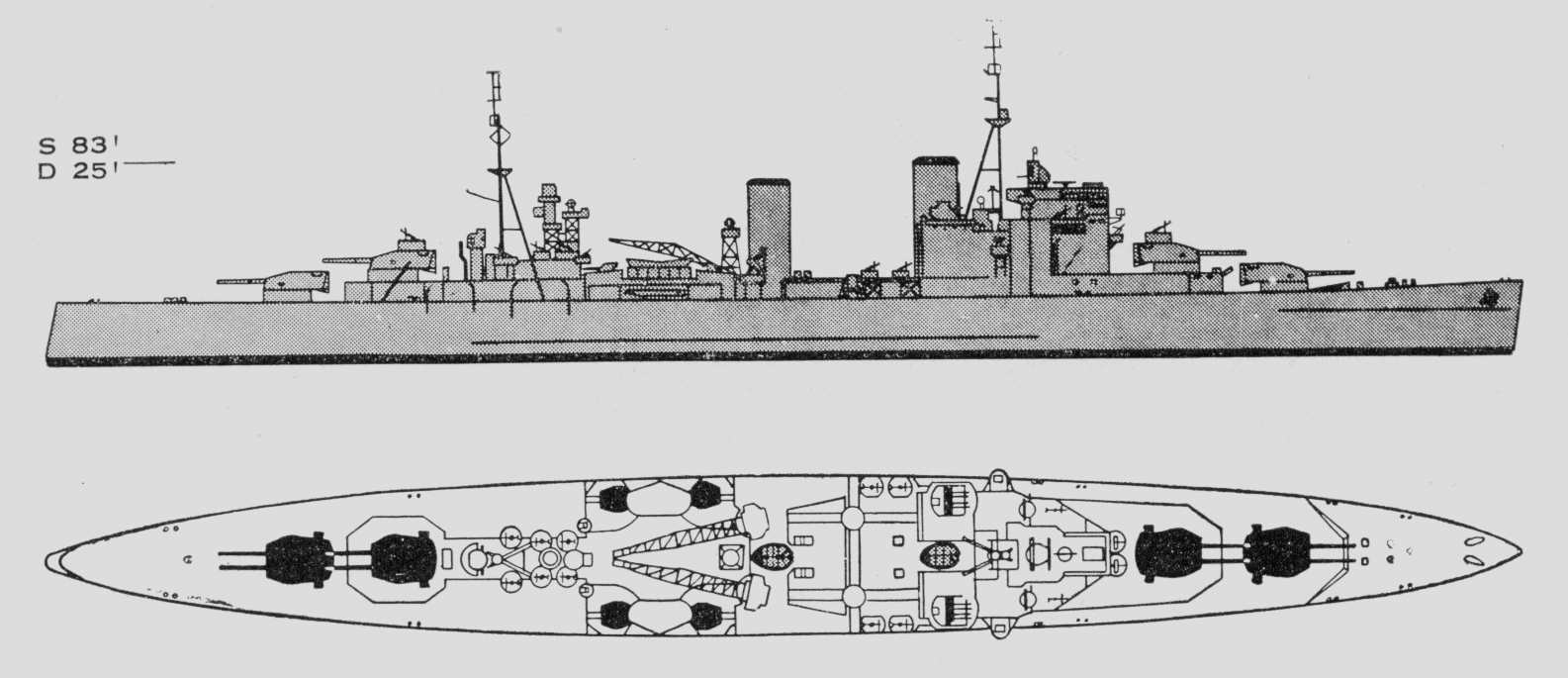
- LONDON heavy cruiser
LONDON was the sole ship of its variant, attempting to put a heavy block superstructure on its class's hull. Structural weaknesses soon became apparent and were corrected only later in the war. LONDON (along with NORFOLK and U.S. cruisers TUSCALOOSA and WICHITA) was part of the Cruiser Covering Force which deserted Convoy PQ17 to its fate, under Admiralty orders. See the photo of the cardstock model of LONDON I've designed.
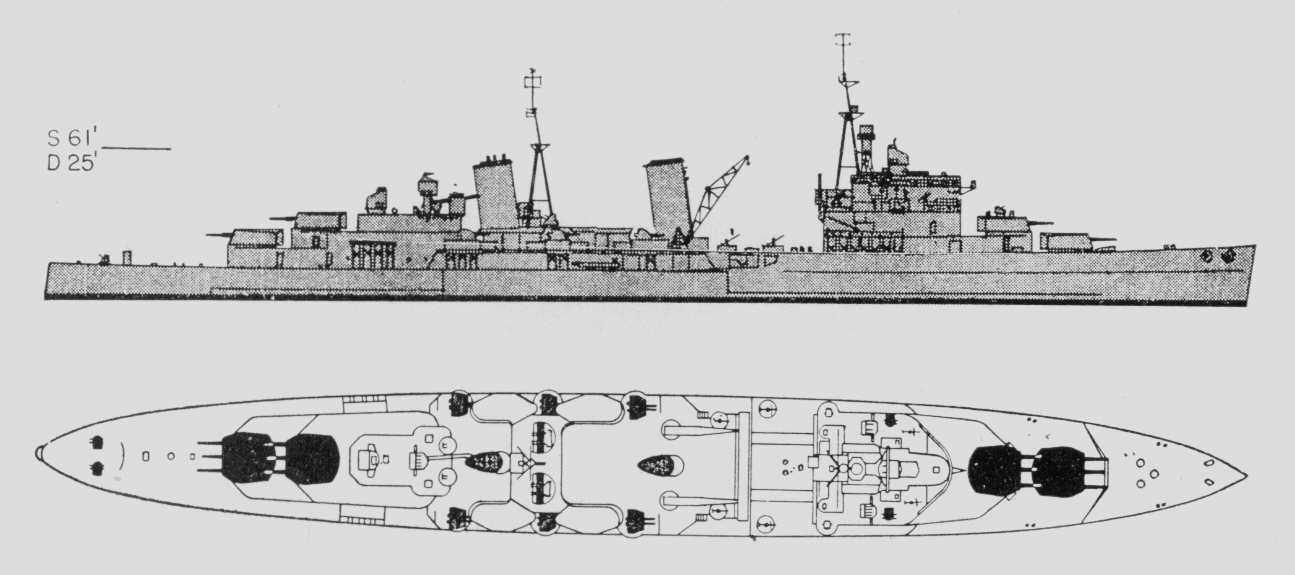
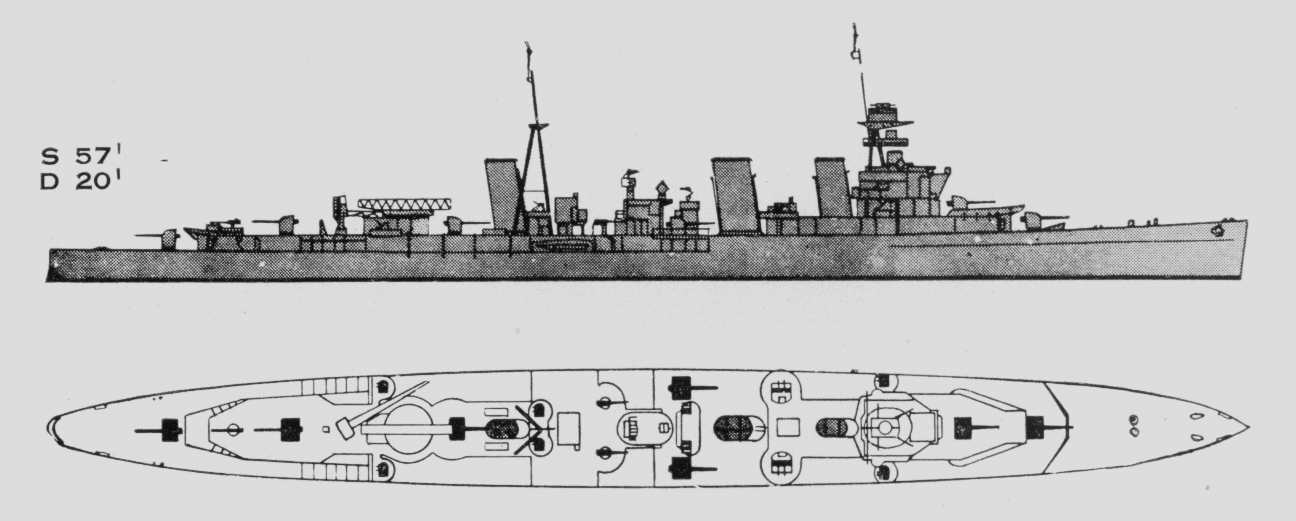
- NORFOLK and other "County" class heavy cruiser
NORFOLK and DORSETSHIRE were both involved in the cornering and sinking of BISMARCK. NORFOLK later made a key, blinding hit on the fast and very powerful German battle cruiser SCHARNHORST before the latter's sinking, Christmas 1943, and seems to have been the best shooting ship in the Royal Navy and probably of the entire war.
DORSETSHIRE was sunk in 1942 off Ceylon by Imperial Japanese Navy carrier aircraft.
See the photo of the cardstock model of the class I've designed.
- BELFAST light cruiser
BELFAST and her ill-fated sister EDINBURGH were heavily armored ships with light cruiser armament which were used to support the Russian convoys. Even immobilized by a stern hit, EDINBURGH managed to sink an inquisitive German destroyer, only to be immediately re-torpedoed and sunk ... carrying down with her millions of pounds in Russian gold! (... which was finally salvaged 10 or so years ago).
- "Colony" class light cruiser
JAMAICA herself teamed with SHEFFIELD to help Sherbrooke's Russian convoy escort fight off German heavy cruiser HIPPER and pocket battleship SCHEER. Although a modern, and more compact design, the Colonys' lack of flotation may have contributed to their heavy losses.
- "Town" class SHEFFIELD
SHEFFIELD was a member of Force H from Gibraltar, accompanying the famous carrier ARK ROYAL, and later fought in key actions north of Norway.
- ARETHUSA class prewar light cruisers
Fought with the Malta Striking Force, sortying out from the island fortress at night, to intercept and gut the German-Italian convoys headed to supply and reinforce Rommel and Afrika Korps in the North African desert.
- HOBART class prewar light cruisers
Given to the Australians, these excellent ships served with distinction both in the Mediterranean and Pacific waters. SYDNEY and a German merchant raider sank each other, PERTH (with "Scrap Iron Flotilla" hero CAPT Hec(tor) Waller) died alongside HOUSTON in early 1942 fighting superior Japanese forces off Java, and HOBART endured torpedoings to survive the war. See the photo of my cardstock model of PERTH.
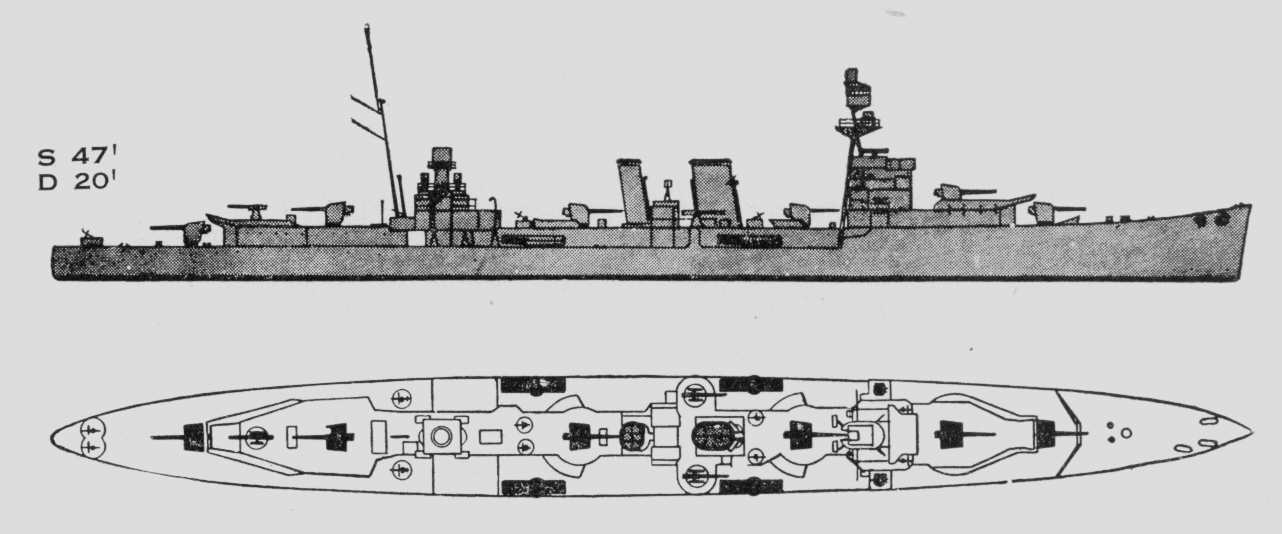
- E class prewar light cruisers
These were on worldwide patrol (for raiders and the like), for the most part, although ENTERPRISE -- which had a twin 6" gun turret in A position -- joined "Town" class light cruiser GLASGOW in running down some German torpedoboats and destroyers in the Bay of Biscay on one rough, windy, and sunny winter's day. They had an unusually heavy torpedo armament of 4 quadruple sets, at the start of the war.
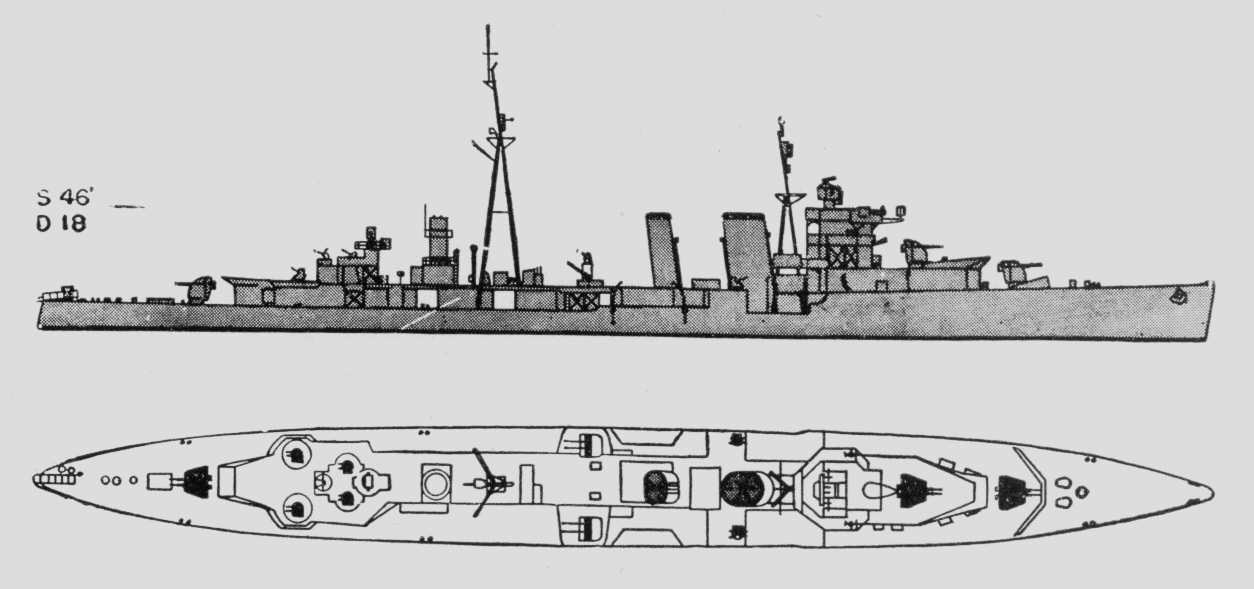
- D class prewar light cruisers
A group of these were in Southeast Asia waters during the fall of the Dutch East Indies. It would have been interesting to see what their torpedo armament could have done in a night battle, but their guns were old and of limited velocity, in comparison to the very high velocity of the Japanese fleet destroyers' guns ... as well as the latter's 24" torpedoes!
- C class prewar light cruisers, in antiaircraft configuration.
Some of these were used in the Mediterranean.
- Ausralian WWI-era light cruisers
ADELAIDE was used for patrol. Pretty ship, but lacking torpedoes for real punch.
Destroyers:
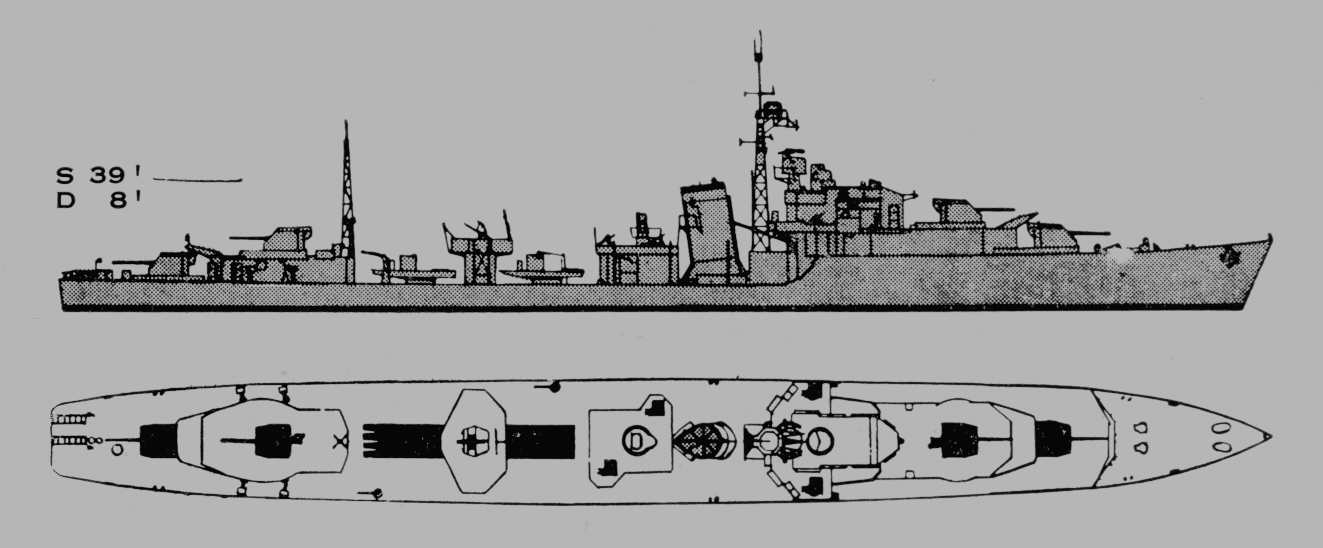
- A to I class British Destroyers
This is a latewar configuration, but at the start, there were 4.7" single gun mounts at 2/B and 4/Y positions and both banks of quadruple (in the I class, quintuple) 21" torpedo tubes.
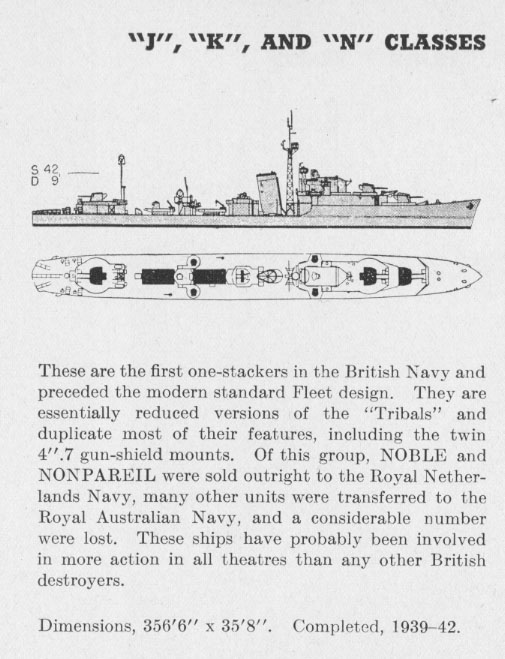
- J, K, & N class British Destroyers
Later than the TRIBAL class, these had 3 twin 4.7" gun surface-only gun turrets and 2 quintuple 21" torpedo tube sets. Eventually, again, the after set of torpedo tubes had to be replaced by the single 4.0" antiaircraft gun.
HMS KELLY was the ship sunk out from under Lord Louis Montbatten, during the desperate evacuation of Commonwealth troops from the island of Crete in May 1941.
Notice the lattice mainmast in this Dec44 drawing, instead of the original tripod version.
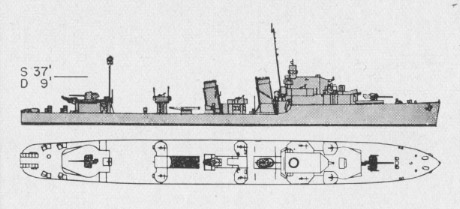
- S class British Destroyers
HMS SAMAUREZ was involved in the sinking of SCHARNHORST, December 1943, and the sinking of the Japanese heavy cruiser HAGURO off Malaya in 1945. Although a similar configuration to the early A to I class destroyers, the Ss had higher angle main battery guns that had some antiaircraft capability.
Imperial Japanese Navy (IJN):
Japanese ships had beautiful, exotic lines (and designs). Crew comfort was a secondary priority, though.
Heavy Cruisers:
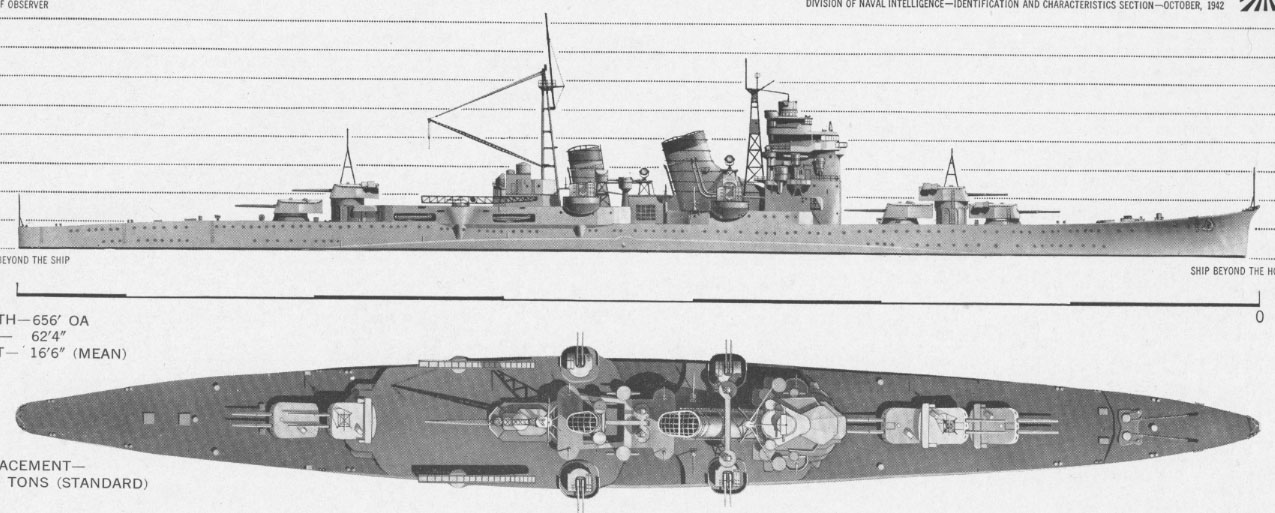
- NACHI class Heavy Cruiser
Ten 8" guns and sixteen "Long Lance" 24" torpedo tubes, reloadable.
- ATAGO class Heavy Cruiser
Ten 8" guns and sixteen "Long Lance" 24" torpedo tubes, reloadable.
- TONE class Heavy Cruiser
TONE and CHIKUMA usually teamed with two KONGO fast battle cruisers, to accompany the "Kido Butai" -- Japan's aircraft carrier striking force and principal naval weapon of attack. Interestingly, their search seaplanes -- not search planes from the carriers -- were used for reconnaissance, which contributed to Japan's horrific defeat at Midway in June 1942.
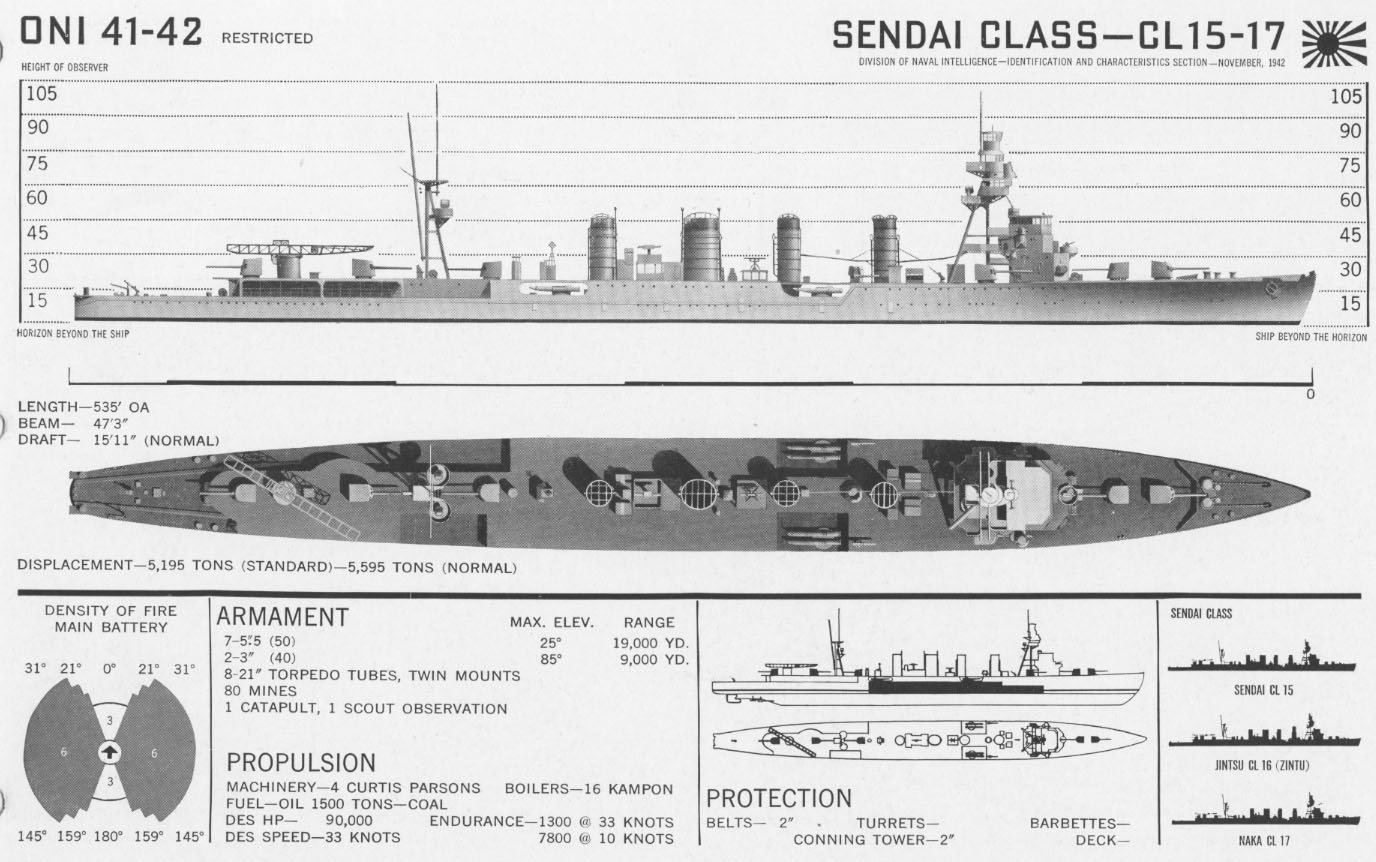
Light Cruisers:
Destroyers:
Italian Regia Marina -- "The Cardboard Fleet":
- LITTORIO (later ITALIA), VENETO VITTORIO, and ROMA fast battleships had nine 15" guns but weak armor. They were beautiful, and the Italian Navy's heart broke when they had to be scrapped after the war, in accordance with the surrender treaty.
ROMA blew up and sank catastrophically, when hit by German remote-controlled glider bombs when the Italian Navy defected and fled to surrender at Malta. VENETO was stopped cold in 1941 by a single puny British 18" Swordfish-launched aerial torpedo. The "revolutionary" torpedo protection architecture proved to be less than advertized (and was actually a concept discarded by the French Navy before/during World War I.)
- GRECALE destroyers had four 4.7"/120mm guns and six 21" torpedo tubes. These were not good sea boats, and two of them foundered in storms immediately after the Second Battle of Sirte. See photos of my cardstock model of this class.
German -- Kriegsmarine -- (More to come, if I have space on here):
Destroyers and Torpedoboats:
NOTES:
I have the basic FM 30-50/NAVAER 00-80V-57 Recognition Pictorial Manual of Naval Vessels volume, of course, as well as its Supplement No. 1 which contains the large scale plans for the British cruisers and destroyers.
The late war German destroyer and torpedoboat and (all the) Soviet plans were found in the July 1, 1950 ONI
200 manual. (Many of the lighter German ships had been awarded to the Soviets and French as war reparations.)
I finally found a good quality plan of the SIMS class destroyer in my recently acquired copy of ONI 54, although that may have been inserted as a supplement, in which case I have no idea when or where it was distributed.
I also have the late war ONI manual for ALL the Japanese merchant ships -- most having drawings. (The early war edition I interlibrary loaned from MIT lacked drawings for most ships.)
I have the complete, original ONI manual for Japanese warships, having photos of models taken from different angles, to facilitate recognition by aviators as well as gunnery officers. Those would be much too space-consuming, though.
I have gotten a complete copy of the 1943 ONI manual for Italian warships. Unhappily, it omits the Trieste/Trento heavy cruisers and early/weak Colleoni class light cruisers: they had already been sunk!
I also have the little 1941 War Department recognition booklets for the U.S., British, and French, but those appear to have been little more than reprintings of Jane's drawings which weren't sufficiently accurate.
If you are a friend, and/or if you would like to share info and ideas about military and naval history and game designing and cardstock model shipbuilding, feel free to write me at: Lou Coatney, 626 Western Ave., Macomb, IL 61455 USA
... or e-mail me at
ELCOAT@Hotmail.com
You may also telephone me at (309)836-1447. You can leave a message and/or your mailing address on my recording machine if I don't answer; but I cannot afford to return calls.
Return to home page?
There have been  visitors here, since 27Mar06.
[4Mar04, revised 21Jun09 ]